Air Quality Monitoring in the Workplace: Your Complete Guide for 2026
Everything you need to know about monitoring indoor air quality at work and home — from CO2 monitors to PM2.5 sensors, what the regulations actually say, and which devices are worth your money in 2026.
Why Air Quality Monitoring in the Workplace Matters
Poor indoor air quality costs UK businesses an estimated £2.7 billion annually in lost productivity and sick days. That's not some abstract figure — I've literally sat through lectures in rooms where the CO2 levels must've been through the roof, and you can feel your brain turning to mush after about 20 minutes. Same thing happens in offices, warehouses, classrooms, you name it.
Air quality monitoring in the workplace isn't just a nice-to-have anymore. Since spring 2026, there's been a proper push from the Health and Safety Executive (HSE) to get businesses taking indoor pollutants seriously. We're talking CO2, particulate matter (PM2.5), volatile organic compounds (VOCs), and formaldehyde — all stuff that builds up in enclosed spaces without you even noticing.
I'm not gonna lie, I only started paying attention to this when my housemate in Fallowfield kept getting headaches every evening. Turns out our poorly ventilated student house had CO2 levels hitting 2,500 ppm regularly. The recommended maximum? 1,000 ppm for occupied spaces.
The Real-World Impact
Drowsiness. Headaches. Difficulty concentrating. These aren't just Monday morning problems — they're symptoms of poor air quality that affect workers across every sector. From open-plan offices in Manchester city centre to manufacturing floors in Sheffield, the air people breathe at work directly impacts their output and wellbeing.
And here's what gets me: most people don't even realise it's happening. You just think you're tired.
What Should You Actually Be Monitoring?
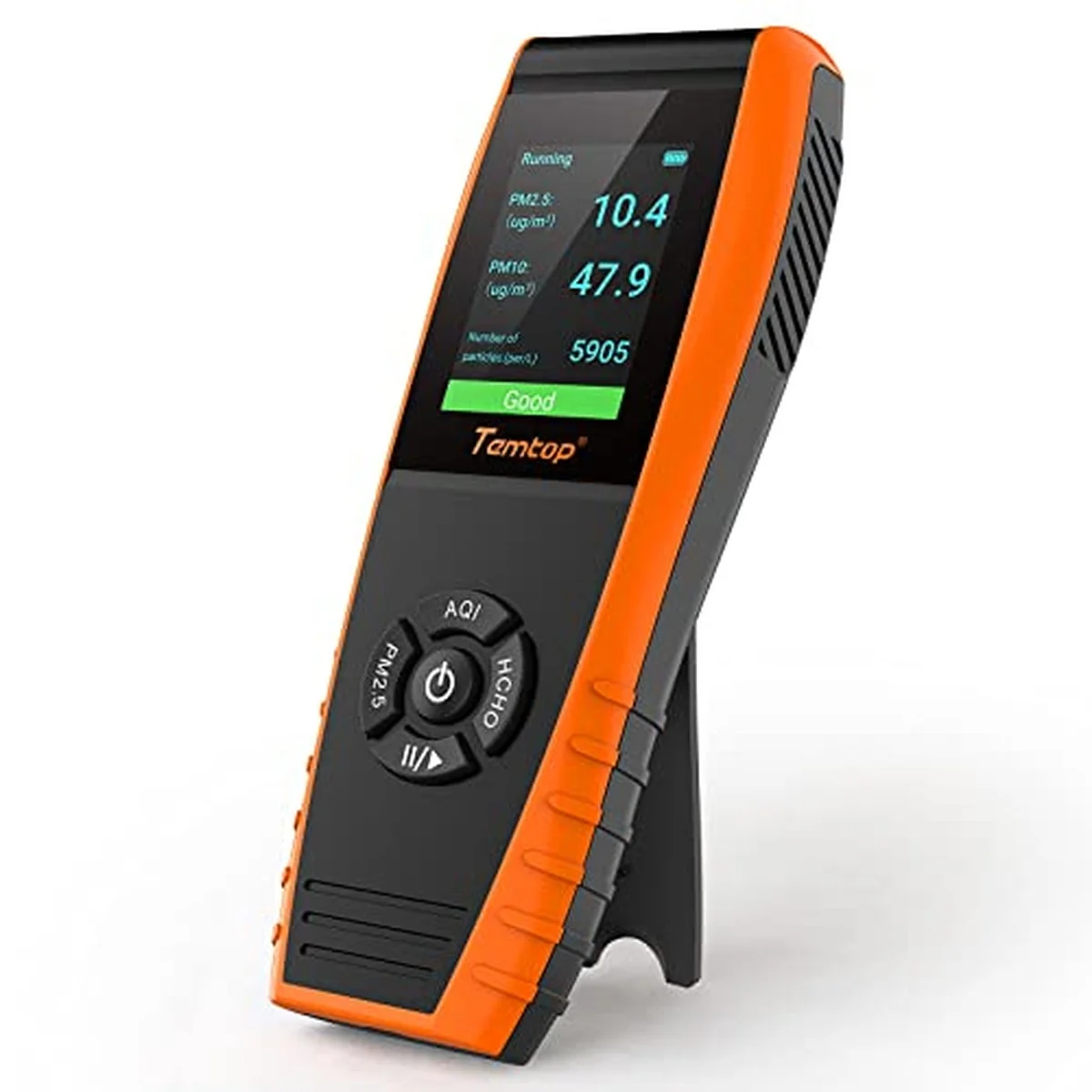
Not all pollutants are equal, and what matters depends on your environment. Here's the breakdown of what a decent Temtop air quality monitor will track:
CO2 (Carbon Dioxide)
The big one for offices and classrooms. A CO2 monitor for office use should alert you when levels exceed 1,000 ppm. In a packed meeting room, I've seen readings spike to 3,000 ppm within 45 minutes. That's genuinely concerning. A CO2 monitor for classroom settings is equally critical — kids can't learn when they're essentially breathing recycled air.
PM2.5 (Fine Particulate Matter)
These tiny particles (2.5 micrometres or smaller) penetrate deep into your lungs. A PM2.5 monitor is essential in workshops, kitchens, and anywhere near busy roads. The WHO guideline is 15 µg/m³ annual mean. Many UK indoor spaces exceed this regularly.
VOCs (Volatile Organic Compounds)
Off-gassing from furniture, cleaning products, paint, printers — it all adds up. A VOC monitor picks up compounds that you can't smell at low concentrations but that still affect your health. Anything above 0.5 mg/m³ total VOCs warrants investigation.
Formaldehyde (HCHO)
Common in new builds and recently renovated spaces. A formaldehyde monitor is particularly important if you've had new flooring, cabinets, or insulation installed. The HSE workplace exposure limit is 2 ppm (short-term), but honestly, you want to be well below that — ideally under 0.1 ppm for continuous exposure.
Temperature and Humidity
Often overlooked but dead important. Humidity below 30% dries out airways; above 60% encourages mould growth. To be fair, anyone living in Manchester already knows about the humidity problem., a favourite among Britain’s tradespeople
UK Regulations and Legal Requirements for Workplace Air Quality
Employers have a legal duty to provide adequate ventilation under the Workplace (Health, Safety and Welfare) Regulations 1992. That's not optional — it's the law.
The HSE's EH40 document sets out workplace exposure limits (WELs) for specific substances. For general office environments, the key benchmarks are:
- CO2: 5,000 ppm long-term WEL / 15,000 ppm short-term (though best practice is below 1,000 ppm)
- Formaldehyde: 2 ppm short-term WEL
- Total inhalable dust: 10 mg/m³
- Respirable dust: 4 mg/m³
Well, actually — those WELs are maximum legal limits. They're not targets. Good practice means staying well below them. The Building Regulations Approved Document F recommends fresh air supply rates of 10 litres per second per person in offices.
So what does this mean practically? You need to measure before you can manage. That's where an indoor air quality monitor becomes essential — not just a box-ticking exercise, but a genuine tool for keeping people safe and productive.
Choosing an Air Quality Monitoring Device
Right, so you know you need to monitor. But which device? The market's flooded with options ranging from £20 tat to £500+ professional units. Here's what actually matters when picking an air quality monitoring device for workplace or home use.
Sensor Accuracy
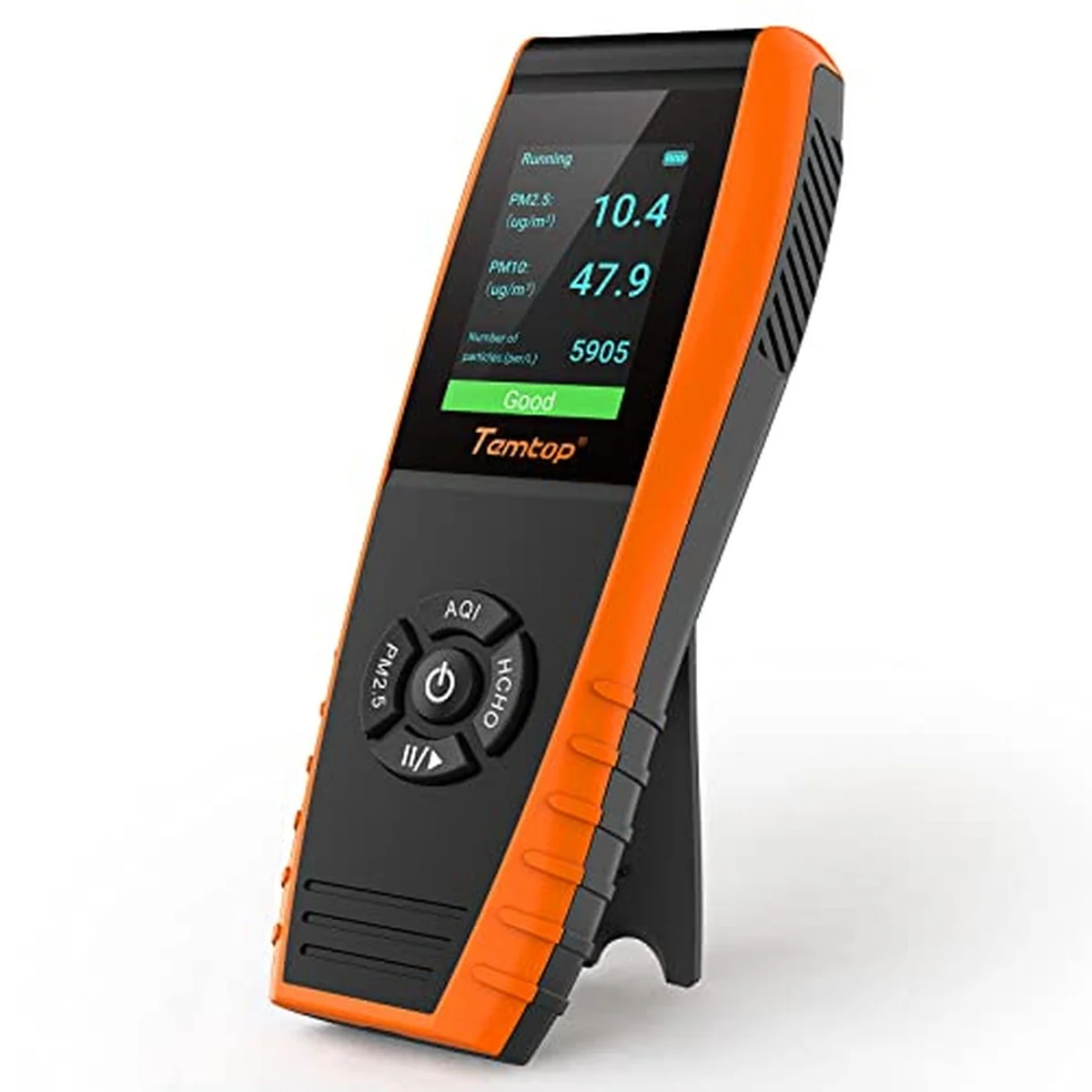
Cheap sensors drift. A lot. The Temtop M10, for instance, uses a laser particle sensor for PM2.5 readings with ±10% accuracy — that's genuinely decent for the price point. Compare that to some budget monitors I've tested that were off by 40-50%. Pointless, basically.
What Parameters Does It Cover?
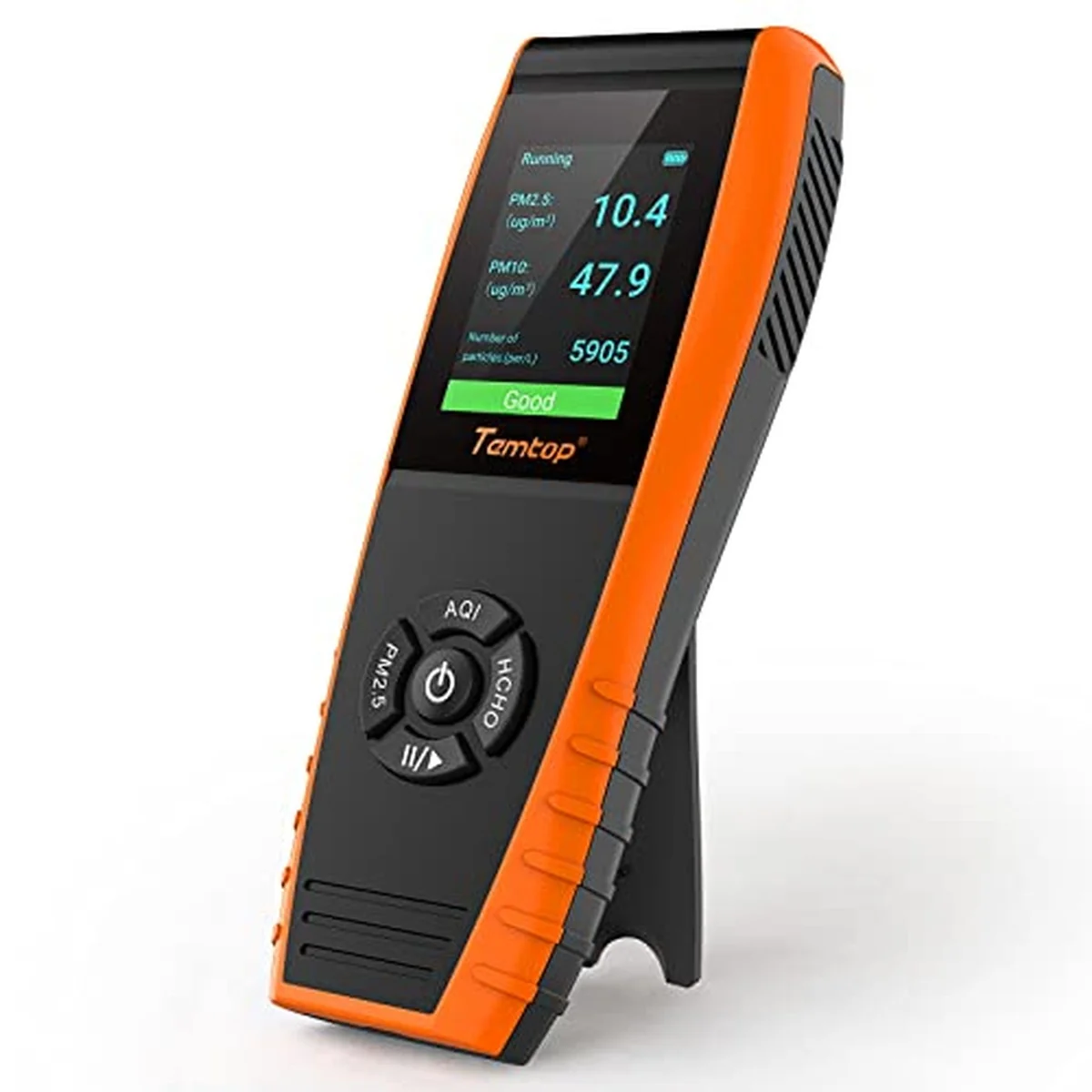
A Temtop indoor air quality monitor typically covers PM2.5, HCHO, TVOC, temperature, and humidity in a single unit. Some models add CO2 monitoring. For workplace compliance, you want at minimum CO2 and particulate matter covered.
Data Logging and Connectivity
If you're doing air quality monitoring in the workplace properly, you need historical data. Real-time readings are useful, but trends over days and weeks tell the real story. Look for devices with app connectivity or USB data export.
Price vs. Performance
Honestly, I've tried cheaper alternatives and they just don't cut it for anything beyond casual curiosity. For reliable workplace monitoring, budget around £25-£100 per unit. The Temtop range starts at £268.64 for basic home monitoring — bang for your buck if you're on a student budget like me — scaling up to professional-grade units for larger spaces.
Worth the extra spend? If you're monitoring for compliance purposes, absolutely yes. A £15 Amazon special won't hold up to scrutiny if the HSE comes knocking.
How to Test Air Quality in Your Home
Home air quality monitoring follows the same principles as workplace monitoring, just on a smaller scale. And trust me, after discovering what was lurking in our Fallowfield house, I'd recommend everyone checks their home at least once., meeting British quality expectations
Where to Place Your Monitor
Breathing zone height — roughly 1.2 to 1.5 metres off the floor. Not right next to windows or doors (you'll just get outdoor readings), and not tucked in a corner where air doesn't circulate. Living rooms and bedrooms are priority spots. Kitchens too, especially if you've got a gas hob.
What to Look For
A CO2 monitor for home use will quickly reveal whether your ventilation is adequate. If you're waking up groggy with headaches, check your bedroom CO2 overnight. I did this last winter and found levels hitting 2,800 ppm by 6am with the window shut. Opened the window a crack — dropped to 900 ppm. Sorted.
For anyone who's moved into a new build or recently renovated property (like that Reddit post about the family getting sick every month — I felt that), a formaldehyde monitor and VOC monitor are essential first purchases. New materials off-gas heavily for the first 6-12 months.
Budget Home Monitoring Setup
You don't need to spend a fortune. A single Temtop air quality monitor at £268.64 covers the basics for one room. For a full house, you're looking at 2-3 units strategically placed. Under £100 total for peace of mind? That's a no-brainer, like.
Air Quality Monitoring Systems: From Single Device to Full Network
There's a difference between sticking a monitor on your desk and implementing a proper air quality monitoring system. For workplaces with multiple zones, you need a networked approach.
Single-Point Monitoring
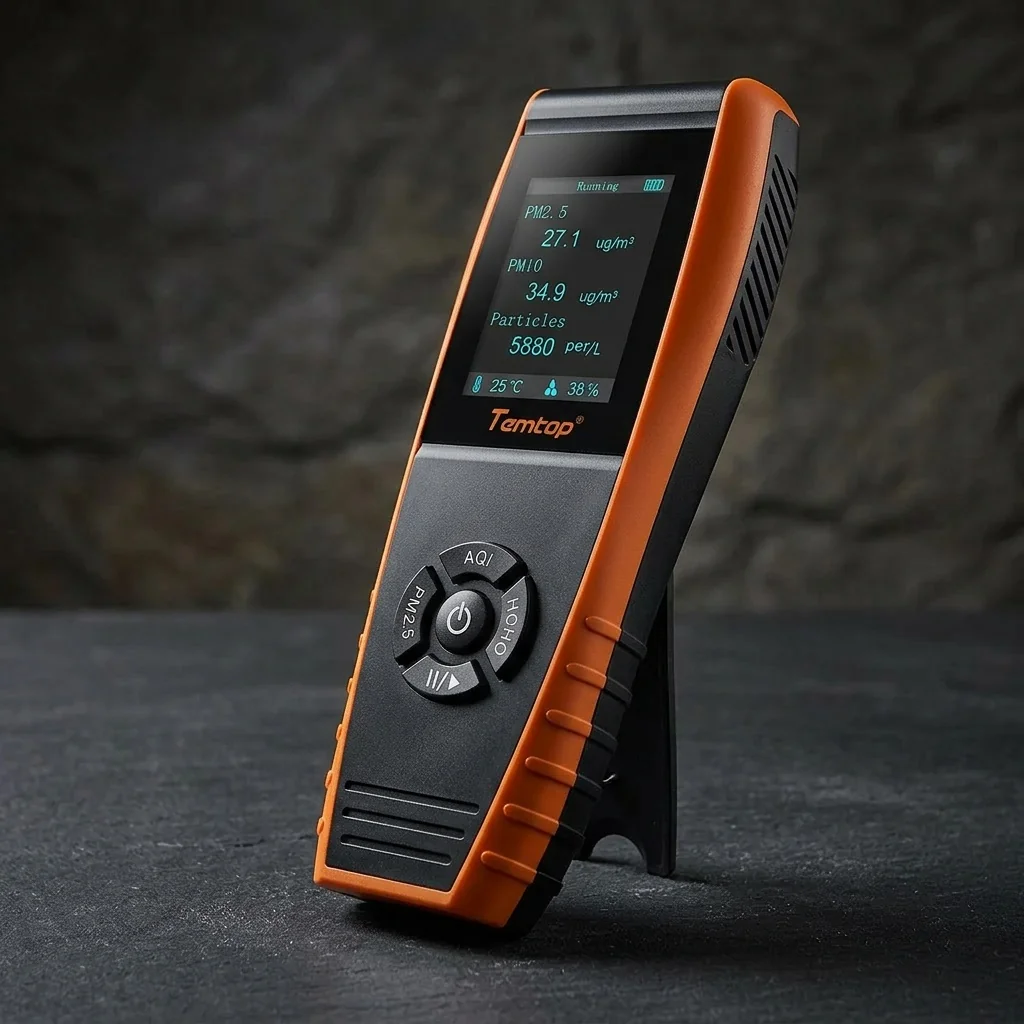
One device, one location. Fine for small offices (under 50m²) or individual rooms. The Temtop M10 works brilliantly here — compact, accurate, gives you instant readings on a clear display. No faff.
Multi-Zone Systems
Larger workplaces need monitors in each distinct area. Open-plan offices, meeting rooms, kitchens, server rooms — they all have different air quality profiles. A proper system logs data from all points centrally, letting facilities managers spot patterns and respond proactively.
Integration with HVAC
The gold standard for 2026: monitors that feed directly into your building management system. When CO2 spikes in the conference room, ventilation increases automatically. This is where air quality monitoring in the workplace moves from reactive to preventive.
- Basic monitoring (3-4 standalone units): £100-£300
- Connected system with data logging: £500-£1,500
- Fully integrated BMS solution: £3,000-£10,000+
That said, don't let perfect be the enemy of good. Starting with a few standalone monitors and reviewing the data monthly is infinitely better than monitoring nothing at all.
Air Quality Monitor Comparison: Temtop Range vs. Alternatives
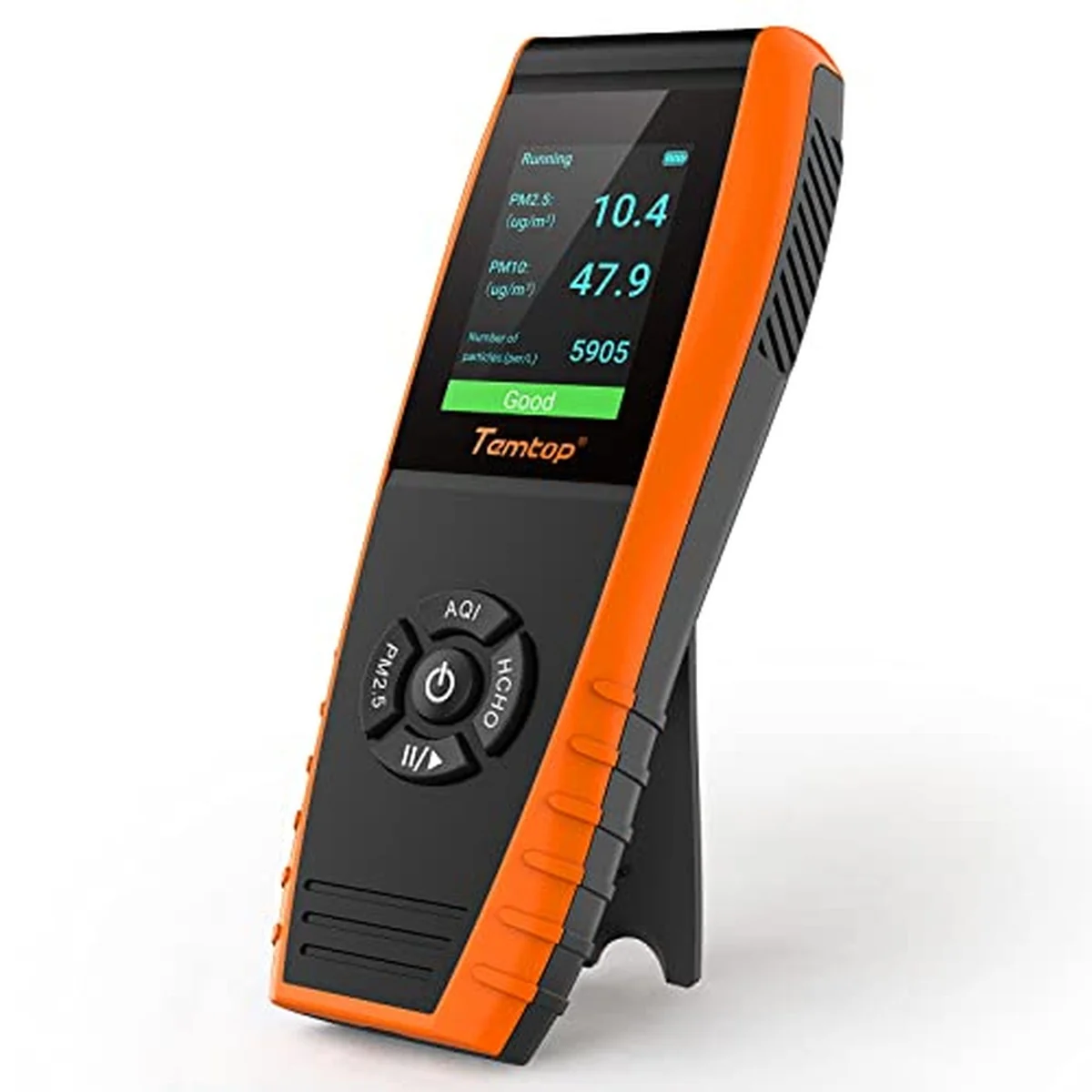
I've put together this comparison based on what's actually available in the UK market as of June 2026. These are the devices I'd genuinely consider for workplace or home air quality monitoring.
| Feature | Temtop M10 | Temtop CO2 Monitor | Generic Budget Monitor | Professional Grade Unit |
|---|---|---|---|---|
| Price (GBP) | £268.64 | £45-£65 | £15-£20 | £200-£500 |
| PM2.5 | Yes (laser sensor, ±10%) | Some models | Yes (electrochemical, ±30-50%) | Yes (±5%) |
| CO2 | Select models | Yes (NDIR sensor, ±50ppm) | Rarely | Yes (±30ppm) |
| VOC/HCHO | Yes | No | Sometimes (poor accuracy) | Yes |
| Data Logging | Basic | Yes | No | Extensive (cloud-based) |
| Display | LCD colour | LCD with traffic light | Basic LED | Touchscreen |
| Best For | Home/small office | Classrooms, offices | Casual curiosity only | Compliance monitoring |
| UK Availability | Temtop UK | Temtop UK | Various retailers | Specialist suppliers |
My mate swears by the Temtop CO2 monitor for his home office, and I get why — the NDIR sensor is the same technology used in professional units costing three times as much. For most people doing home air quality monitoring or basic workplace checks, the Temtop range hits that sweet spot between accuracy and affordability., popular across England
Frequently Asked Questions
What is the legal requirement for air quality monitoring in the workplace UK?
Under the Workplace (Health, Safety and Welfare) Regulations 1992, employers must ensure adequate ventilation with fresh or purified air. While continuous monitoring isn't explicitly mandated for all workplaces, the HSE recommends keeping CO2 below 1,000 ppm in occupied spaces. Industries handling hazardous substances must monitor under COSHH regulations, with specific workplace exposure limits set out in EH40.
How often should workplace air quality be tested?
Continuous real-time monitoring is ideal, but at minimum, workplaces should conduct spot checks weekly and full assessments quarterly. High-risk environments (manufacturing, laboratories, healthcare) require continuous monitoring. Seasonal changes affect readings significantly — summer and winter profiles differ by 30-40% in most UK buildings due to ventilation patterns.
What CO2 level is dangerous in an office?
CO2 becomes problematic above 1,000 ppm, causing drowsiness and reduced concentration. Above 2,000 ppm, headaches and fatigue are common. The legal workplace exposure limit is 5,000 ppm (8-hour TWA), but cognitive performance drops measurably at just 1,000 ppm. A good CO2 monitor for office use should alert at 800 ppm to allow proactive ventilation adjustments.
Can I use a home air quality monitor for workplace compliance?
Consumer-grade monitors like the Temtop M10 (£268.64) provide useful indicative readings but aren't typically accepted for formal compliance documentation. For HSE compliance evidence, you'll need calibrated instruments with traceable accuracy certificates. However, consumer monitors are excellent for ongoing awareness and early warning — many workplaces use both tiers effectively.
Where should I place an air quality monitor in my home?
Place monitors at breathing height (1.2-1.5m) away from windows, doors, and direct heat sources. Priority locations are bedrooms (overnight CO2 accumulation), living rooms (highest occupancy), and kitchens (cooking pollutants). Avoid placing directly on external walls where temperature differentials affect humidity readings. For a typical 3-bedroom house, 2-3 monitors provide adequate coverage.
What's the difference between a CO2 monitor and a full air quality monitor?
A dedicated Temtop CO2 monitor measures only carbon dioxide concentration using an NDIR sensor (±50 ppm accuracy). A full indoor air quality monitor like the Temtop M10 measures multiple parameters — typically PM2.5, HCHO, TVOC, temperature, and humidity simultaneously. For offices, a CO2-specific monitor often suffices. For homes with new furnishings or renovation work, a multi-parameter device is more appropriate.
Key Takeaways
- Air quality monitoring in the workplace is a legal obligation under UK health and safety regulations — employers must ensure adequate ventilation and can face enforcement action for non-compliance.
- CO2 above 1,000 ppm reduces cognitive performance measurably — a CO2 monitor for office or classroom use pays for itself in productivity gains within weeks.
- The Temtop M10 at £268.64 offers reliable home air quality monitoring with laser-based PM2.5 sensing, VOC, and formaldehyde detection — spot on for budget-conscious monitoring.
- New builds and renovated properties off-gas formaldehyde and VOCs for 6-12 months — testing with a dedicated monitor is essential, not optional.
- Placement matters enormously: monitors at 1.2-1.5m height, away from windows and heat sources, give the most representative readings of actual breathing zone air quality.
- Start simple, scale up: a single air quality monitoring device provides immediate value — you don't need a £10,000 system to begin improving your indoor environment.
- UK workplace exposure limits (EH40) are legal maximums, not targets — best practice means staying well below them, with the NHS recommending proactive monitoring for respiratory health.
Getting Started with Workplace and Home Air Quality Monitoring
Look, I know this might seem like a lot of information. But air quality monitoring in the workplace — or at home — doesn't have to be complicated or expensive. The hardest part is actually starting.
My recommendation for June 2026? Get a single monitor. Put it where you spend the most time. Watch the readings for a week. You'll be surprised what you find — I certainly was when I discovered our student house was basically a CO2 hotbox every evening.
Whether you go for a Temtop M10 for basic home monitoring or invest in a full air quality monitoring system for your workplace, the data you collect will drive better decisions about ventilation, occupancy, and ultimately the health of everyone in that space.
The technology's accessible, the prices have come down massively, and the science is clear. There's genuinely no good reason not to monitor your indoor air in 2026. Your lungs — and your brain — will thank you for it.
Ready to try TEMTOPQUALITY?
Shop Now — £268.64