Should I Open Windows When Outdoor Air Pollution Is High Uk
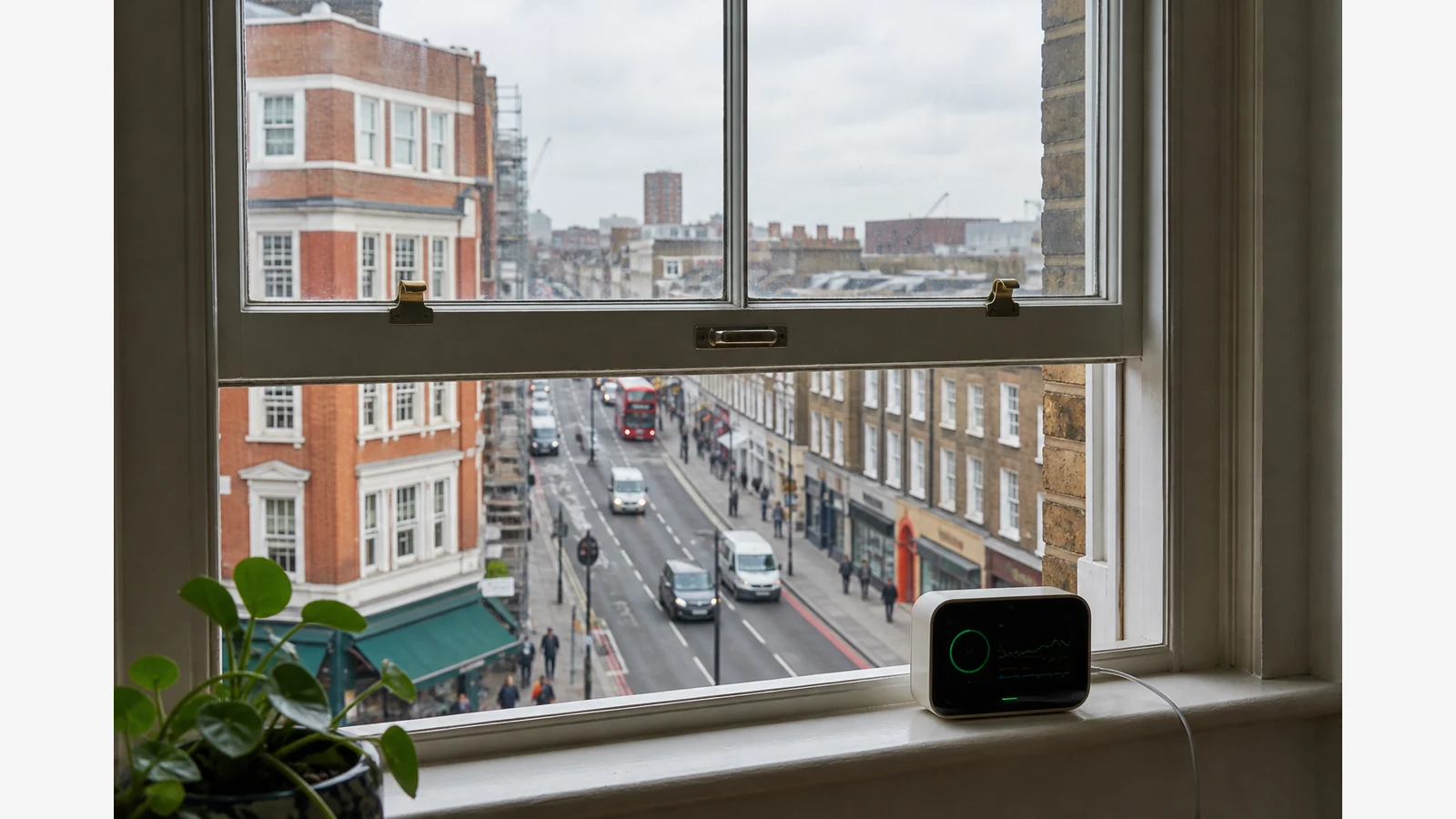
On high outdoor pollution days in the UK, favour short purge ventilation after indoor spikes, then close windows again and manage indoor sources. Check the Daily Air Quality Index (DAQI) before you air a roadside flat for long stretches.
Start with DAQI, not guesswork
GOV.UK health advice for the Daily Air Quality Index (DAQI) sets short-term outdoor pollution bands and practical exposure-reduction advice. Guidance on using the DAQI explains that the index covers pollutants including PM2.5 and PM10 — useful context when you compare an outdoor forecast with indoor particle readings.
A nearby council outdoor sensor is not the same as the air in your living room. Use DAQI as the outdoor cue, then decide window timing with what you smell, see, and measure indoors.
Decision path for UK flats
- Check today’s DAQI band for your area before a long airing.
- Note indoor context: cooking smoke, cleaning sprays, or a stuffy closed room after people have been home all day.
- If outdoors is elevated, keep windows mostly closed; use a short purge only when you need to clear a strong indoor spike.
- When DAQI eases, re-air briefly, then settle into normal ventilation habits.
AQIS working material notes that closing windows can reduce outdoor pollution ingress during elevated outdoor episodes, while indoor sources still matter — see the GOV.UK AQIS working paper on physical activity and air pollution exposure.
DAQI band vs suggested airing behaviour
| Outdoor DAQI band | Suggested home airing behaviour |
|---|---|
| Low | Normal short airing is usually fine; still clear cooking smoke promptly. |
| Moderate | Prefer shorter openings; avoid leaving roadside windows open for hours. |
| High / Very High | Limit ingress; use brief purges only after indoor spikes; follow DAQI health advice for sensitive groups. |
There is no single AQI number that legally forces you to keep windows shut. Treat the table as exposure-reduction behaviour, not a legal rule.
Who should be extra cautious
Households with asthma or COPD should lean on the official DAQI health advice on high and very high days, keep indoor particle sources calm, and avoid long roadside airing during peaks. For kitchen spikes that happen regardless of outdoor air, see how to read kitchen PM2.5 curves. Roadside flats also pair well with the practical notes in outdoor air quality monitoring context.
Next step
Bookmark DAQI for your postcode, then run one week of “outdoor band + indoor activity” notes. Adjust window timing from that diary rather than from a single scary reading.