Damp Mould Condensation Air Quality Monitor Uk
A home air quality monitor can help you spot ventilation and moisture-linked patterns in UK rooms, but it cannot identify mould species, prove Awaab's Law compliance, or replace repairs. Use readings as supporting notes alongside photos and official guidance — not as a diagnosis.
What a monitor can and cannot tell you
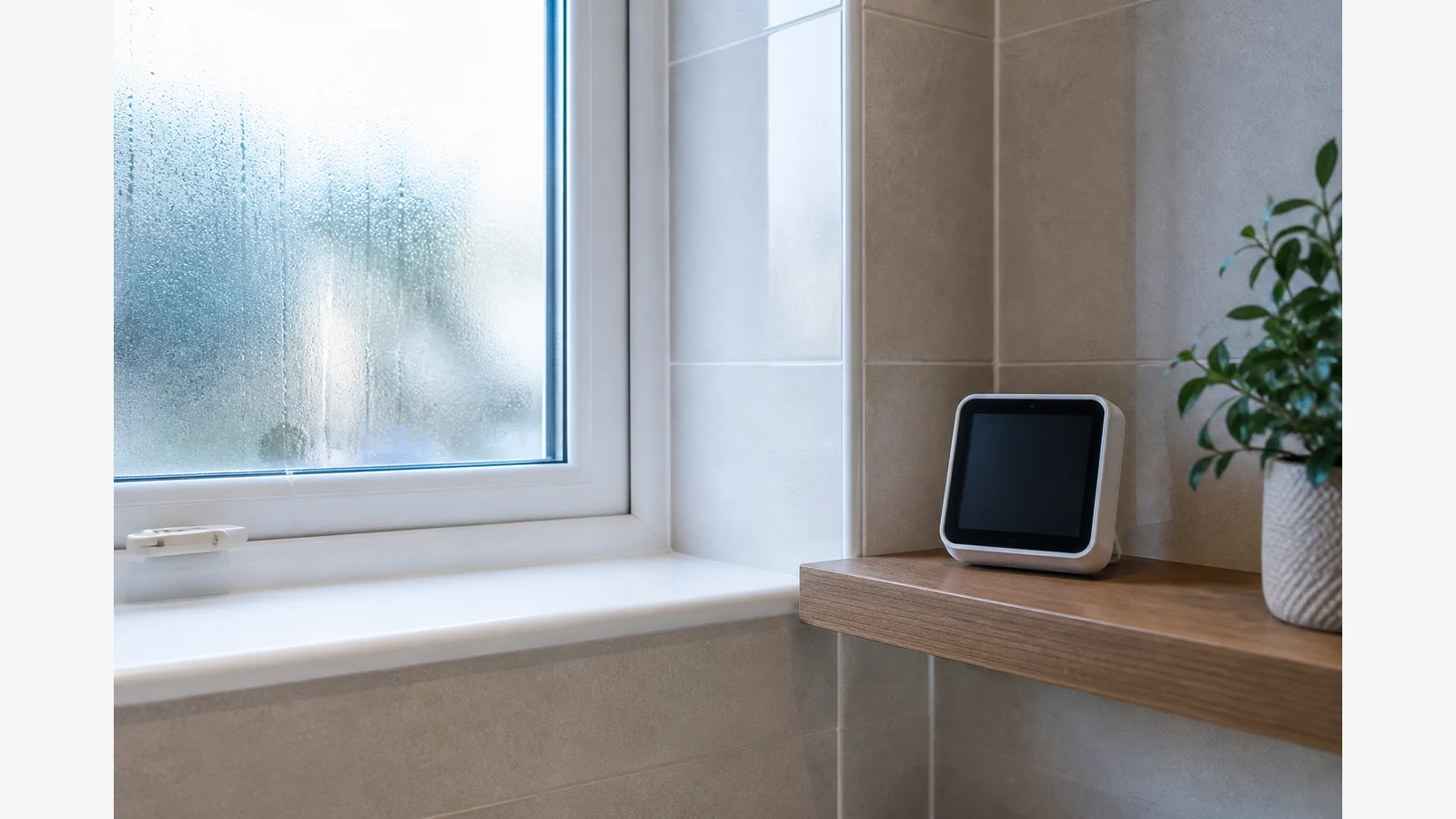
Condensation on cold windows, musty bathrooms after showers, and closed-window winters are everyday UK moisture clues. Official guidance from GOV.UK on damp and mould health risks links damp and mould to ventilation and moisture control. Separately, GOV.UK guidance on indoor airborne allergens explains how mould spores and poor ventilation can feed indoor allergen pathways.
What consumer meters typically help with is relative change: rooms that stay humid after cooking or bathing, evenings when air feels stuffy, and whether a short purge of fresh air brings readings back down. They do not tell you which mould is growing, whether mycotoxins are present, or whether a landlord has met a legal duty.
A practical room-by-room decision path
- Walk bathroom, kitchen, bedrooms and any cold external wall overnight or after showers — note visible condensation and musty smell.
- Ventilate where you can: extractors on while cooking/bathing, lids on pans, and short window openings when outdoor air is cleaner.
- If you use a multi-metric monitor, log humidity-linked comfort cues and any particle or chemical channels your device shows, room by room, for a week.
- When readings plus photos show a persistent pattern (not a one-off steamy shower), use that pack for a repair or GP conversation — still without claiming the meter “proves” mould.
Seven-day condensation checklist
- Bathroom evenings: glass and tiles wet after showers?
- Kitchen nights: steam lingering with the extractor off?
- Bedrooms: cold external walls or window panes wet by morning?
- Whole-home winters: windows kept shut for days with laundry drying indoors?
Pair each note with date, room, and a photo. That diary is more useful than a single alarming screenshot.
Who should not rely on a monitor alone
Active leaks, widespread black mould, and households with vulnerable people who need clinical advice should escalate beyond DIY metering. Follow the official damp and mould guidance first; a consumer device is a helper for patterns, not a substitute for fixing the building fabric.
Related reading on this site
If outdoor pollution also shapes your window decisions, see our guide on whether to open windows on high outdoor pollution days. For seasonal smoke episodes, use the Bonfire Night indoor air checklist. Existing background on indoor particles is also covered in our indoor air quality monitor overview.
Next step
Log seven days of room notes beside photos and dates. Bring that pack to a landlord, housing officer, or GP discussion if symptoms or visible damp persist — and keep expectations honest about what a home meter can show.